National Crush India: How Social Media Crowns Pop-Culture Stars
Every few years, Indian social media seems to agree on a new face to obsess over. A smile from a film, a memorable expression, a viral reel or even a few seconds from a song can suddenly turn a relatively familiar actor into one of the most talked-about names in the country.
That is how the unofficial label “National Crush” has become part of India’s pop-culture vocabulary.
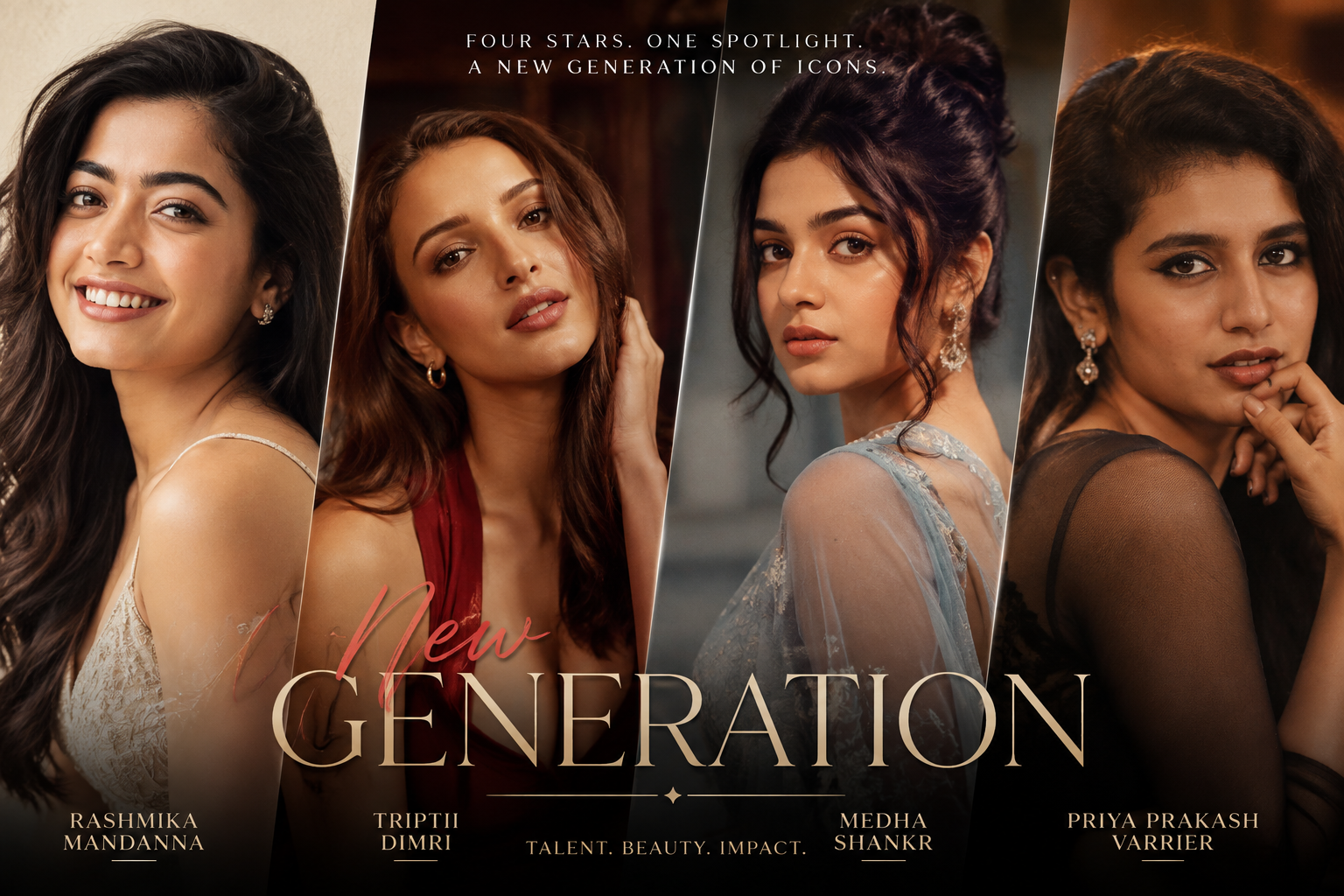
There is no official committee that awards the title, and there is certainly no permanent holder of the crown. It is a fan-driven and media-amplified label that changes with the cultural moment. Rashmika Mandanna, Triptii Dimri, Medha Shankr and Priya Prakash Varrier are among the actresses who have, at different points, been associated with the phenomenon.
But what makes someone a “National Crush”? And why can a single scene sometimes create more buzz than years of traditional promotion?
Add a wide editorial image here
Suggested image: Rashmika Mandanna / Indian pop-culture collage
What Does “National Crush” Actually Mean?
The phrase National Crush India is best understood as an unofficial internet-era nickname. It usually describes an actor who suddenly develops a huge fan following across different parts of the country.
The appeal can come from many places: a successful film, a viral song, a social-media moment, a character audiences connect with or simply a personality that photographs and videos extremely well online.
Unlike a traditional star campaign, the momentum often begins with fans. Instagram posts, fan edits, YouTube Shorts, memes and reposts can push one particular face into conversations far beyond the audience of the original film.
And once mainstream entertainment media begins covering the trend, the nickname can become part of the celebrity’s public identity.
Iconic “National Crushes” and Their Breakthrough Moments
| Star | Breakthrough Moment | Why Audiences Connected |
|---|---|---|
| Rashmika Mandanna | Kirik Party, Geetha Govindam and later Pushpa | Girl-next-door charm, expressive performances, infectious smile and pan-India appeal |
| Triptii Dimri | Animal, following acclaimed work in Laila Majnu, Bulbbul and Qala | Screen presence, emotional intensity and an ability to make complex characters memorable |
| Medha Shankr | 12th Fail | Natural screen presence, understated performance and emotional authenticity |
| Priya Prakash Varrier | Oru Adaar Love and its viral wink sequence | A single memorable expression became one of India’s earliest major pre-Reels viral celebrity moments |
| Rohit Saraf | Mismatched and other youth-focused projects | Boy-next-door appeal, warmth and strong connection with younger audiences |
The stories are different, but the pattern is remarkably similar: audiences discover a performer, the internet amplifies that discovery and entertainment culture gives the moment a name.
Add actress image here
Suggested image: Rashmika Mandanna
Rashmika Mandanna: One of the Biggest Examples
Rashmika Mandanna is perhaps the clearest example of how the “National Crush” label can evolve into genuine pan-India stardom.
Her early popularity grew through Kannada cinema, particularly Kirik Party, before films such as Geetha Govindam expanded her audience. Her popularity continued to grow with projects including Dear Comrade, Sita Ramam, Varisu and the Pushpa franchise.
In 2020, media reports widely described Rashmika as India’s “National Crush”, reflecting the popularity she had developed among fans across regions.
What makes her journey particularly interesting is that the nickname did not remain an internet trend. Her career expanded into large-scale multilingual productions and a much broader pan-India audience.
Rashmika herself has also played down the importance of such labels, saying that tags do not define an actor’s career and that the love audiences show for their films matters more.
Add actress image here
Suggested image: Triptii Dimri
Triptii Dimri: When a Breakout Role Changes Everything
Triptii Dimri’s rise demonstrates how quickly a major theatrical release can change an actor’s visibility.
Before Animal, Dimri had already built a strong reputation through films such as Laila Majnu, Bulbbul and Qala. Her performances had earned critical attention, but her mainstream visibility changed dramatically after Animal.
Following the film’s release, social media exploded with conversations about her character Zoya. Media outlets began calling her the new “National Crush”, while her social-media following also surged.
Interestingly, Dimri has spoken about the label herself. She has expressed gratitude for the audience response while repeatedly emphasising that she wants people to recognise her primarily for her work as an actor.
That distinction matters. A viral moment can introduce an actor to millions of people, but keeping those audiences interested requires performances that go beyond the original trend.
Medha Shankr and the Power of Simplicity
Medha Shankr’s journey offers a different version of the same phenomenon.
Her performance in 12th Fail connected with audiences through simplicity rather than an obvious glamour-driven image. Her character Shraddha Joshi was presented with an understated quality that fit the grounded tone of the film.
As the film found a wider audience, Shankr’s screen presence began generating significant attention online. She was subsequently included in media conversations around India’s latest “National Crush”.
Her example shows that the internet does not always reward the loudest or most glamorous performance. Sometimes, relatability itself becomes the attraction.
Add actress image here
Suggested image: Medha Shankr
Priya Prakash Varrier and the Viral Wink That Changed the Game
Long before Instagram Reels became the dominant short-video format, Priya Prakash Varrier demonstrated just how powerful a few seconds of footage could be.
A sequence from the Malayalam film Oru Adaar Love featuring Varrier’s now-famous wink spread rapidly across social media in 2018.
The clip was short, visually simple and instantly recognisable. Fans began sharing it, creating memes and posting reactions across platforms.
Varrier became an internet sensation almost overnight, making her one of the defining examples of India’s early viral-celebrity era.
Her story is important because it shows that the “National Crush” phenomenon did not begin with today’s Reels culture. Social platforms had already started changing how Indian audiences discovered entertainment personalities.
The Anatomy of a “National Crush”
1. Relatability Matters
Today’s audiences often respond strongly to celebrities who feel accessible rather than completely untouchable.
Instagram stories, behind-the-scenes moments, interviews and informal videos allow fans to see a more relaxed side of actors. A celebrity can still be glamorous while appearing relatable enough for audiences to feel personally connected to them.
This is one reason the girl-next-door image has remained powerful in Indian popular culture.
2. One Viral Moment Can Change the Conversation
A five-second expression, a song hook, a dance move or an emotional scene can become the most recognisable part of a film’s online identity.
Fans then turn that moment into edits, memes, reaction videos and short-form content. Each new post introduces the celebrity to another audience.
The result can be a feedback loop: more visibility creates more searches, more searches create more coverage and more coverage creates even greater visibility.
Add actress image here
Suggested image: Priya Prakash Varrier
3. The Internet Rewards Distinctive Personalities
There is a reason certain expressions and personalities become GIFs, memes and fan edits while others disappear quickly.
Internet culture rewards recognisable visual identities. A memorable smile, distinctive eyes, a particular style of speaking or an unusual screen presence can give fans something easy to recreate and share.
That makes the celebrity’s personality almost as important as the film itself.
4. The Film Still Has to Deliver
Social media can create attention, but it cannot guarantee a long career.
A viral moment may introduce an actor to millions of people. The next challenge is converting that attention into strong performances, successful projects and a career that can survive after the original trend disappears.
Why the “National Crush” Tag Is So Powerful
From a marketing perspective, the label can be extremely valuable.
It gives audiences an easy way to describe a celebrity’s popularity and gives entertainment media a catchy headline. It can also encourage people who are unfamiliar with an actor to search for their previous work.
Triptii Dimri’s post-Animal experience is a strong example. Reports noted that audiences who discovered her through the film also began exploring earlier projects such as Qala and Bulbbul.
In that sense, the “National Crush” phenomenon can work as an unofficial discovery engine for an actor’s entire filmography.
But Can an Actor Escape the “National Crush” Label?
This is where the real career test begins.
Being popular online is not the same as becoming a dependable box-office performer or respected long-term actor. The internet can create a star overnight, but it can also move on just as quickly.
The actors who sustain their popularity usually do more than repeat the same image that made them viral.
- Rashmika Mandanna has expanded from romantic and girl-next-door roles into major action and multilingual projects.
- Triptii Dimri entered the mainstream spotlight after already establishing herself through more performance-oriented projects.
- Medha Shankr gained attention through a grounded, performance-led film rather than a traditional glamour launch.
- Priya Prakash Varrier remains one of the clearest examples of how a viral moment can instantly create nationwide recognition.
The challenge for every new internet sensation is therefore the same: What comes after the viral moment?
Add a multi-actress collage here
Suggested image: Rashmika Mandanna, Triptii Dimri, Medha Shankr and Priya Prakash Varrier
From Viral Fame to Long-Term Stardom
The “National Crush” phenomenon says a lot about how Indian entertainment has changed.
Earlier, celebrity popularity was largely built through films, television appearances, magazines, music channels and traditional publicity. Today, a smartphone camera and a few seconds of footage can introduce an actor to an audience of millions.
But the internet crown is temporary. What turns that attention into a career is consistency.
Actors who successfully move beyond the label are the ones who use the initial attention as a starting point rather than an identity. They experiment with different characters, genres and languages while allowing their work to become bigger than the viral moment that first made them famous.
The Internet’s Favourite Crown Keeps Changing
There may never be a permanent “National Crush of India”. The title belongs to the mood of the moment.
One year it can be an actress whose smile dominates social media. The next, it can be a performer whose five-minute role becomes the most discussed part of a blockbuster. Another year, it may be an actor discovered through an OTT series.
What remains constant is the audience’s ability to turn a face into a cultural moment.
The internet can give someone the crown. Only talent, consistency and the right career choices can make the crown last.
Frequently Asked Questions
Who is India’s National Crush?
There is no officially recognised “National Crush of India”. The phrase is an informal fan and media label that has been associated with different celebrities at different times, including Rashmika Mandanna, Triptii Dimri, Medha Shankr and Priya Prakash Varrier.
Why was Rashmika Mandanna called the National Crush?
Rashmika Mandanna became widely associated with the title as her popularity grew through films such as Kirik Party, Geetha Govindam and later Pushpa. Her social-media popularity and pan-India appeal helped strengthen the label.
Why did Triptii Dimri become the new National Crush?
Triptii Dimri’s popularity surged after Animal, following earlier acclaimed performances in projects including Laila Majnu, Bulbbul and Qala. Her sudden mainstream visibility led fans and media outlets to describe her as the new “National Crush”.
Who became famous because of the viral wink?
Priya Prakash Varrier became an internet sensation after a short wink sequence from Oru Adaar Love went viral in 2018.
Is National Crush an official award?
No. “National Crush” is an unofficial nickname created and popularised through fans, social media and entertainment coverage. It is not an official industry award or title.
Every few years, Indian social media seems to agree on a new face to obsess over. A smile from a film, a memorable expression, a viral reel or even a few seconds from a song can suddenly turn a relatively familiar actor into one of the most talked-about names in the country.
That is how the unofficial label “National Crush” has become part of India’s pop-culture vocabulary.
There is no official committee that awards the title, and there is certainly no permanent holder of the crown. It is a fan-driven and media-amplified label that changes with the cultural moment. Rashmika Mandanna, Triptii Dimri, Medha Shankr and Priya Prakash Varrier are among the actresses who have, at different points, been associated with the phenomenon.
But what makes someone a “National Crush”? And why can a single scene sometimes create more buzz than years of traditional promotion?
Add a wide editorial image here
Suggested image: Rashmika Mandanna / Indian pop-culture collage
What Does “National Crush” Actually Mean?
The phrase National Crush India is best understood as an unofficial internet-era nickname. It usually describes an actor who suddenly develops a huge fan following across different parts of the country.
The appeal can come from many places: a successful film, a viral song, a social-media moment, a character audiences connect with or simply a personality that photographs and videos extremely well online.
Unlike a traditional star campaign, the momentum often begins with fans. Instagram posts, fan edits, YouTube Shorts, memes and reposts can push one particular face into conversations far beyond the audience of the original film.
And once mainstream entertainment media begins covering the trend, the nickname can become part of the celebrity’s public identity.
Iconic “National Crushes” and Their Breakthrough Moments
| Star | Breakthrough Moment | Why Audiences Connected |
|---|---|---|
| Rashmika Mandanna | Kirik Party, Geetha Govindam and later Pushpa | Girl-next-door charm, expressive performances, infectious smile and pan-India appeal |
| Triptii Dimri | Animal, following acclaimed work in Laila Majnu, Bulbbul and Qala | Screen presence, emotional intensity and an ability to make complex characters memorable |
| Medha Shankr | 12th Fail | Natural screen presence, understated performance and emotional authenticity |
| Priya Prakash Varrier | Oru Adaar Love and its viral wink sequence | A single memorable expression became one of India’s earliest major pre-Reels viral celebrity moments |
| Rohit Saraf | Mismatched and other youth-focused projects | Boy-next-door appeal, warmth and strong connection with younger audiences |
The stories are different, but the pattern is remarkably similar: audiences discover a performer, the internet amplifies that discovery and entertainment culture gives the moment a name.
Add actress image here
Suggested image: Rashmika Mandanna
Rashmika Mandanna: One of the Biggest Examples
Rashmika Mandanna is perhaps the clearest example of how the “National Crush” label can evolve into genuine pan-India stardom.
Her early popularity grew through Kannada cinema, particularly Kirik Party, before films such as Geetha Govindam expanded her audience. Her popularity continued to grow with projects including Dear Comrade, Sita Ramam, Varisu and the Pushpa franchise.
In 2020, media reports widely described Rashmika as India’s “National Crush”, reflecting the popularity she had developed among fans across regions.
What makes her journey particularly interesting is that the nickname did not remain an internet trend. Her career expanded into large-scale multilingual productions and a much broader pan-India audience.
Rashmika herself has also played down the importance of such labels, saying that tags do not define an actor’s career and that the love audiences show for their films matters more.
Add actress image here
Suggested image: Triptii Dimri
Triptii Dimri: When a Breakout Role Changes Everything
Triptii Dimri’s rise demonstrates how quickly a major theatrical release can change an actor’s visibility.
Before Animal, Dimri had already built a strong reputation through films such as Laila Majnu, Bulbbul and Qala. Her performances had earned critical attention, but her mainstream visibility changed dramatically after Animal.
Following the film’s release, social media exploded with conversations about her character Zoya. Media outlets began calling her the new “National Crush”, while her social-media following also surged.
Interestingly, Dimri has spoken about the label herself. She has expressed gratitude for the audience response while repeatedly emphasising that she wants people to recognise her primarily for her work as an actor.
That distinction matters. A viral moment can introduce an actor to millions of people, but keeping those audiences interested requires performances that go beyond the original trend.
Medha Shankr and the Power of Simplicity
Medha Shankr’s journey offers a different version of the same phenomenon.
Her performance in 12th Fail connected with audiences through simplicity rather than an obvious glamour-driven image. Her character Shraddha Joshi was presented with an understated quality that fit the grounded tone of the film.
As the film found a wider audience, Shankr’s screen presence began generating significant attention online. She was subsequently included in media conversations around India’s latest “National Crush”.
Her example shows that the internet does not always reward the loudest or most glamorous performance. Sometimes, relatability itself becomes the attraction.
Add actress image here
Suggested image: Medha Shankr
Priya Prakash Varrier and the Viral Wink That Changed the Game
Long before Instagram Reels became the dominant short-video format, Priya Prakash Varrier demonstrated just how powerful a few seconds of footage could be.
A sequence from the Malayalam film Oru Adaar Love featuring Varrier’s now-famous wink spread rapidly across social media in 2018.
The clip was short, visually simple and instantly recognisable. Fans began sharing it, creating memes and posting reactions across platforms.
Varrier became an internet sensation almost overnight, making her one of the defining examples of India’s early viral-celebrity era.
Her story is important because it shows that the “National Crush” phenomenon did not begin with today’s Reels culture. Social platforms had already started changing how Indian audiences discovered entertainment personalities.
The Anatomy of a “National Crush”
1. Relatability Matters
Today’s audiences often respond strongly to celebrities who feel accessible rather than completely untouchable.
Instagram stories, behind-the-scenes moments, interviews and informal videos allow fans to see a more relaxed side of actors. A celebrity can still be glamorous while appearing relatable enough for audiences to feel personally connected to them.
This is one reason the girl-next-door image has remained powerful in Indian popular culture.
2. One Viral Moment Can Change the Conversation
A five-second expression, a song hook, a dance move or an emotional scene can become the most recognisable part of a film’s online identity.
Fans then turn that moment into edits, memes, reaction videos and short-form content. Each new post introduces the celebrity to another audience.
The result can be a feedback loop: more visibility creates more searches, more searches create more coverage and more coverage creates even greater visibility.
Add actress image here
Suggested image: Priya Prakash Varrier
3. The Internet Rewards Distinctive Personalities
There is a reason certain expressions and personalities become GIFs, memes and fan edits while others disappear quickly.
Internet culture rewards recognisable visual identities. A memorable smile, distinctive eyes, a particular style of speaking or an unusual screen presence can give fans something easy to recreate and share.
That makes the celebrity’s personality almost as important as the film itself.
4. The Film Still Has to Deliver
Social media can create attention, but it cannot guarantee a long career.
A viral moment may introduce an actor to millions of people. The next challenge is converting that attention into strong performances, successful projects and a career that can survive after the original trend disappears.
Why the “National Crush” Tag Is So Powerful
From a marketing perspective, the label can be extremely valuable.
It gives audiences an easy way to describe a celebrity’s popularity and gives entertainment media a catchy headline. It can also encourage people who are unfamiliar with an actor to search for their previous work.
Triptii Dimri’s post-Animal experience is a strong example. Reports noted that audiences who discovered her through the film also began exploring earlier projects such as Qala and Bulbbul.
In that sense, the “National Crush” phenomenon can work as an unofficial discovery engine for an actor’s entire filmography.
But Can an Actor Escape the “National Crush” Label?
This is where the real career test begins.
Being popular online is not the same as becoming a dependable box-office performer or respected long-term actor. The internet can create a star overnight, but it can also move on just as quickly.
The actors who sustain their popularity usually do more than repeat the same image that made them viral.
- Rashmika Mandanna has expanded from romantic and girl-next-door roles into major action and multilingual projects.
- Triptii Dimri entered the mainstream spotlight after already establishing herself through more performance-oriented projects.
- Medha Shankr gained attention through a grounded, performance-led film rather than a traditional glamour launch.
- Priya Prakash Varrier remains one of the clearest examples of how a viral moment can instantly create nationwide recognition.
The challenge for every new internet sensation is therefore the same: What comes after the viral moment?
Add a multi-actress collage here
Suggested image: Rashmika Mandanna, Triptii Dimri, Medha Shankr and Priya Prakash Varrier
From Viral Fame to Long-Term Stardom
The “National Crush” phenomenon says a lot about how Indian entertainment has changed.
Earlier, celebrity popularity was largely built through films, television appearances, magazines, music channels and traditional publicity. Today, a smartphone camera and a few seconds of footage can introduce an actor to an audience of millions.
But the internet crown is temporary. What turns that attention into a career is consistency.
Actors who successfully move beyond the label are the ones who use the initial attention as a starting point rather than an identity. They experiment with different characters, genres and languages while allowing their work to become bigger than the viral moment that first made them famous.
The Internet’s Favourite Crown Keeps Changing
There may never be a permanent “National Crush of India”. The title belongs to the mood of the moment.
One year it can be an actress whose smile dominates social media. The next, it can be a performer whose five-minute role becomes the most discussed part of a blockbuster. Another year, it may be an actor discovered through an OTT series.
What remains constant is the audience’s ability to turn a face into a cultural moment.
The internet can give someone the crown. Only talent, consistency and the right career choices can make the crown last.
Frequently Asked Questions
Who is India’s National Crush?
There is no officially recognised “National Crush of India”. The phrase is an informal fan and media label that has been associated with different celebrities at different times, including Rashmika Mandanna, Triptii Dimri, Medha Shankr and Priya Prakash Varrier.
Why was Rashmika Mandanna called the National Crush?
Rashmika Mandanna became widely associated with the title as her popularity grew through films such as Kirik Party, Geetha Govindam and later Pushpa. Her social-media popularity and pan-India appeal helped strengthen the label.
Why did Triptii Dimri become the new National Crush?
Triptii Dimri’s popularity surged after Animal, following earlier acclaimed performances in projects including Laila Majnu, Bulbbul and Qala. Her sudden mainstream visibility led fans and media outlets to describe her as the new “National Crush”.
Who became famous because of the viral wink?
Priya Prakash Varrier became an internet sensation after a short wink sequence from Oru Adaar Love went viral in 2018.
Is National Crush an official award?
No. “National Crush” is an unofficial nickname created and popularised through fans, social media and entertainment coverage. It is not an official industry award or title.